
Private Property and Moral Limits
Young Captain Jack · The Son of a SoldierThis flow traces the novel’s argument that wartime authority must respect civilians, homes, and the vulnerable.
increasing Bearing strength in each event
 decreasing
Bearing strength in each eventdecreasingThe Threatened Home
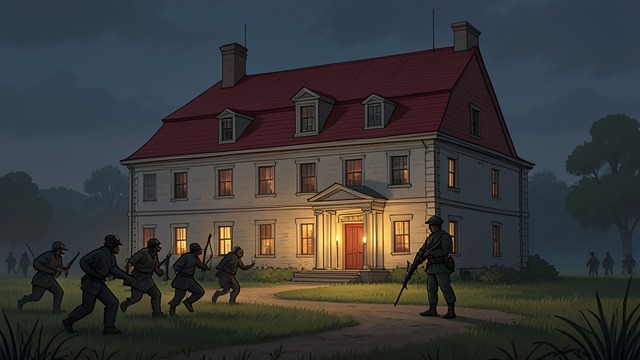
Property Under Fire
A Civilian Space
The Ruthven mansion is threatened by guerrillas while serving as a hospital. Jack insists that the house is private property and cannot be treated as battlefield spoil.
Protection as Duty
His defense joins legal principle with care for women and wounded men. Property matters because people depend upon it for safety.
Stanton’s Guarantee
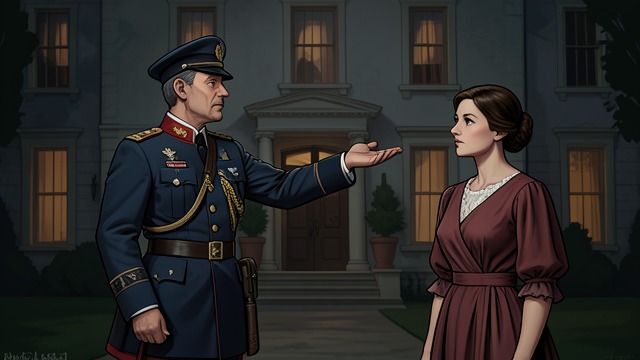
Military Restraint
Federal Assurance
Colonel Stanton promises that the Ruthven home will not be harmed so long as its occupants act without treachery. His statement places limits on victorious power.
Trust Established
The guarantee helps Alice Ruthven reconsider the Union Army. Respect for property becomes a first step toward respect between enemies.
The Burning Plantation
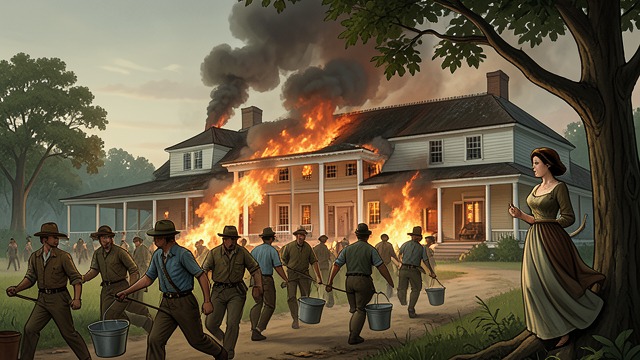
Property in Crisis
Fire and Flight
Mary Ruthven’s Plantation is set ablaze amid military movement. Its destruction shows how civilians suffer when armies and outlaws treat homes as expendable.
Restoration Effort
Jack and the Home Guard fight the fire rather than abandon the property. Their labor converts principle into immediate action.
The Stolen Horses
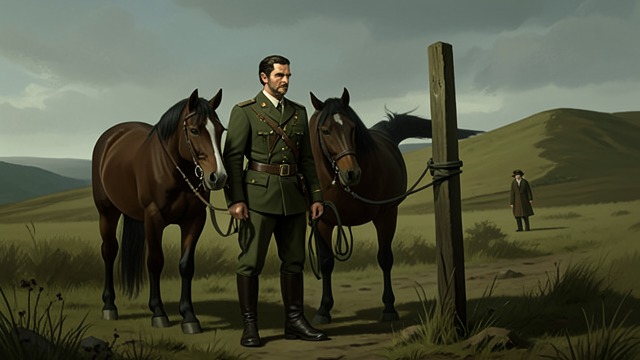
Theft Disguised as War
Guerrilla Claim
Pete Gendron insists that stolen horses are intended for the Confederate cause. Jack recognizes the assertion as a pretext for personal gain.
Moral Boundary
The episode distinguishes legitimate requisition from criminal appropriation. Wartime language cannot make theft honorable.
Homes After War
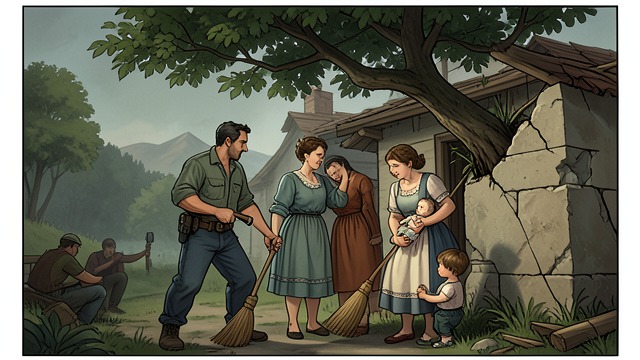
Rebuilding Security
From Survival to Recovery
Once fighting ends, the families can repair property, inheritance, and relationships. Material recovery becomes possible because violence no longer governs every decision.
Law Replaces Force
Mackey’s imprisonment and the fortune’s recovery affirm lawful ownership over wartime coercion. The novel ends by restoring both homes and moral boundaries.
during the first battle
during Colonel Stanton’s visit
during the Battle at Larson's Corners
after the battle subsides
after the Civil War
